

01What to wear
Modest, comfortable clothing is the rule at every religious site. You do not need special clothes, just a little care.
- Cover your shoulders and knees: light trousers or a long skirt with a T-shirt are ideal.
- Carry a light scarf or shawl for extra cover or sun protection.
- Wear shoes that slip on and off easily; you will take them off many times.
- Avoid very tight, see-through or revealing clothing, and hats inside shrines.
Socks are useful. Temple floors and courtyards can be hot in the sun and cold in winter.
02Shoes, leather and what not to bring in
Remove your shoes before entering any temple building, shrine room or monastery hall; look for the pile of shoes at the door. Many Hindu temples do not allow leather items such as belts, bags and wallets inside, so leave them in the vehicle or with your guide when visiting places like Pashupatinath.
Do not bring food, cigarettes or alcohol into temple areas, and turn your phone to silent.
03Walk clockwise around stupas and temples
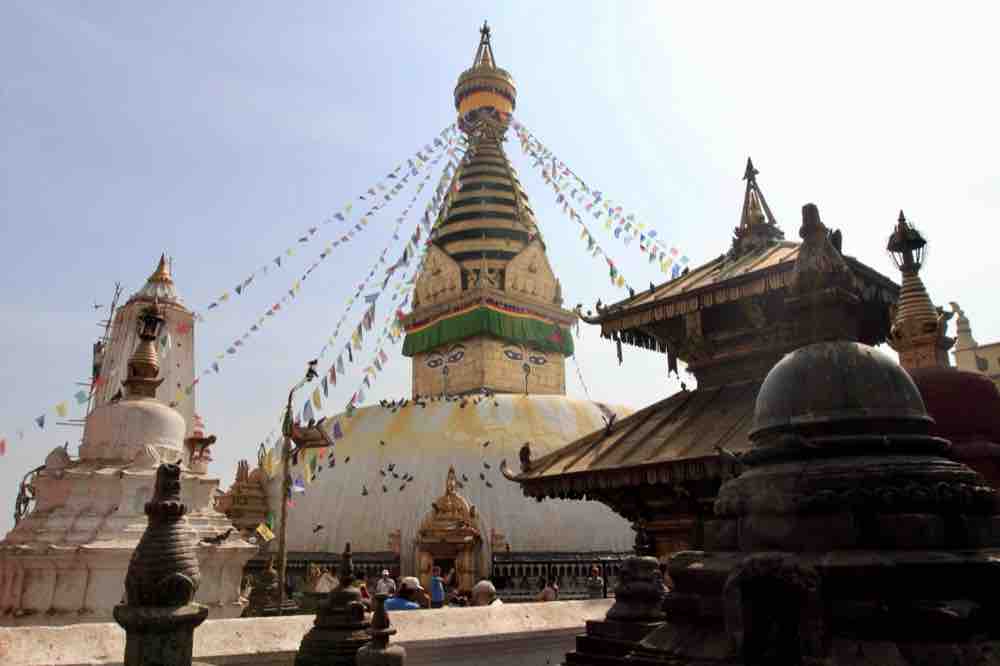
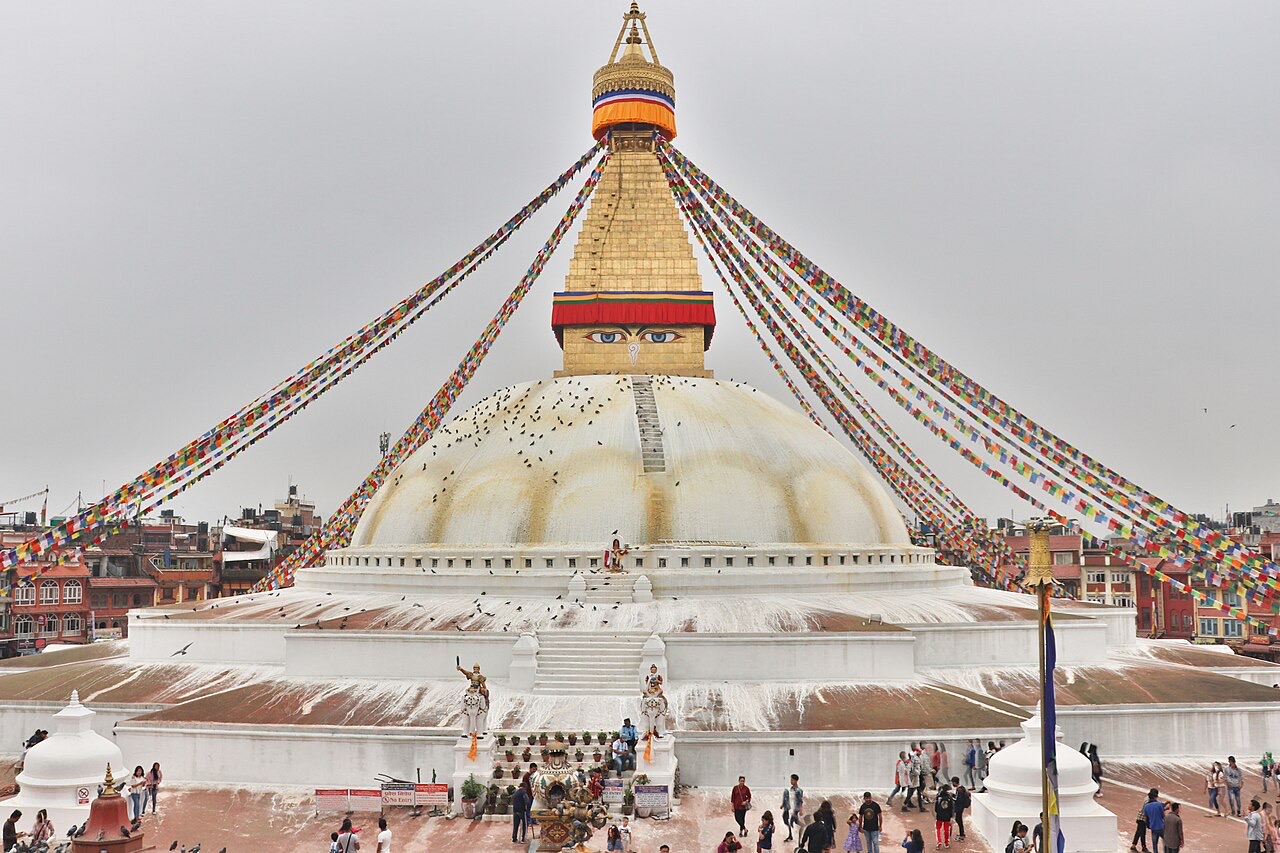
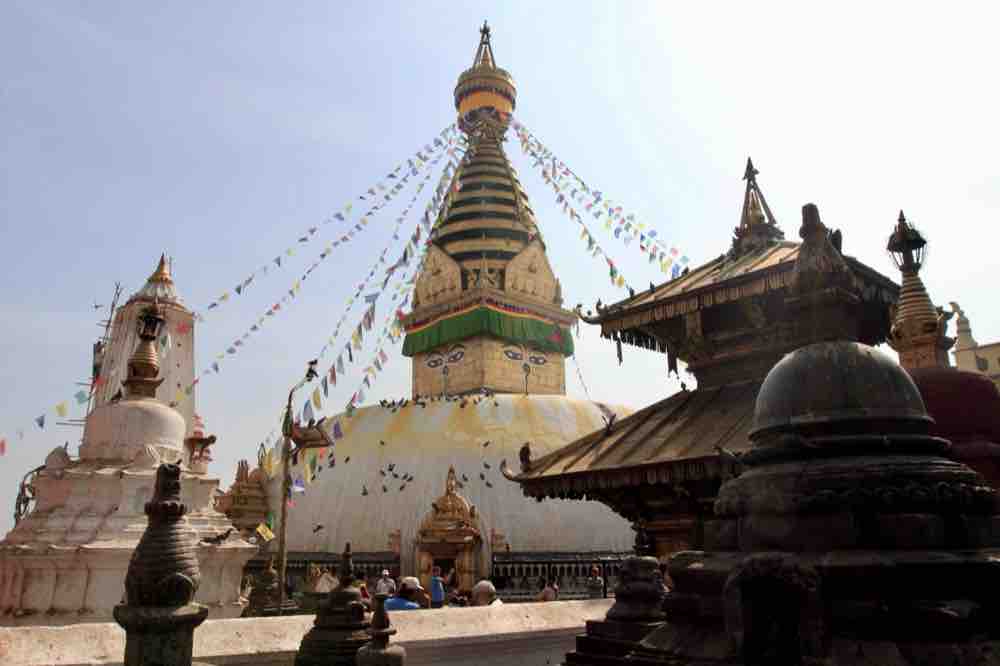
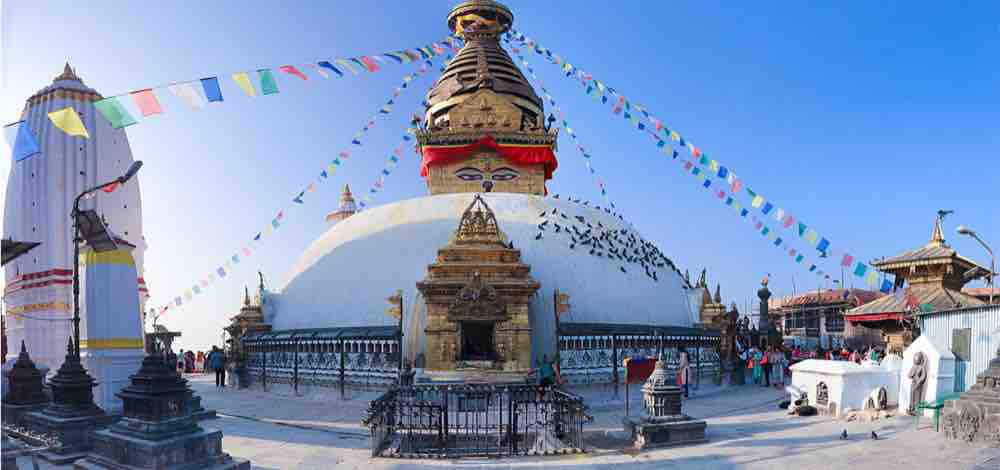
Buddhists and Hindus walk around sacred places in a clockwise direction, keeping the stupa, shrine or prayer wall on their right. Follow the flow of pilgrims at Boudhanath and Swayambhunath and you will always be going the right way.
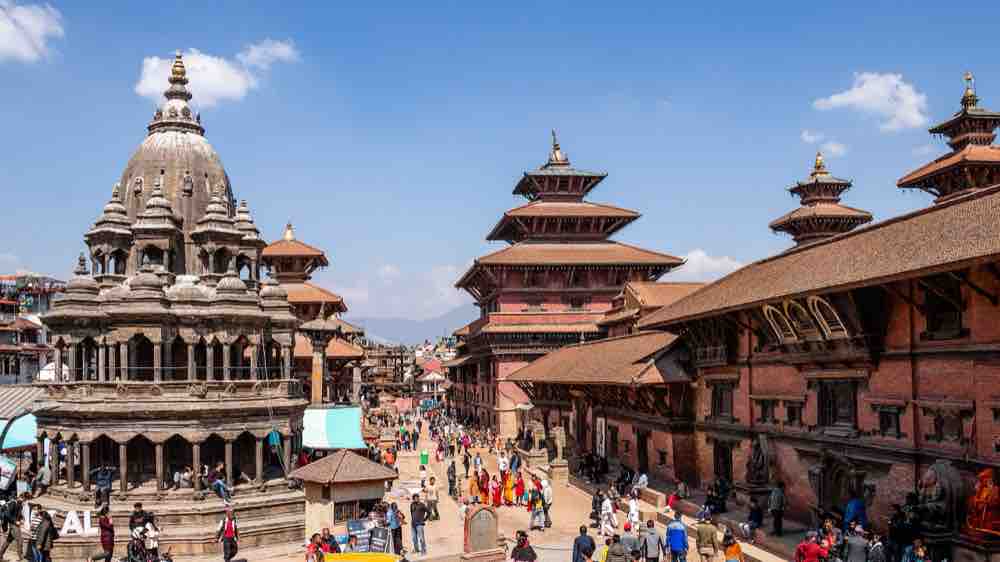
- Spin prayer wheels clockwise with your right hand as you pass.
- Pass to the left of mani stones (carved prayer stones) and chortens on trails.
- Never climb on stupas, statues or temple plinths for a photo.
04Photography
Taking photos outside temples is usually fine, but many shrine interiors do not allow it, and signs are not always in English.
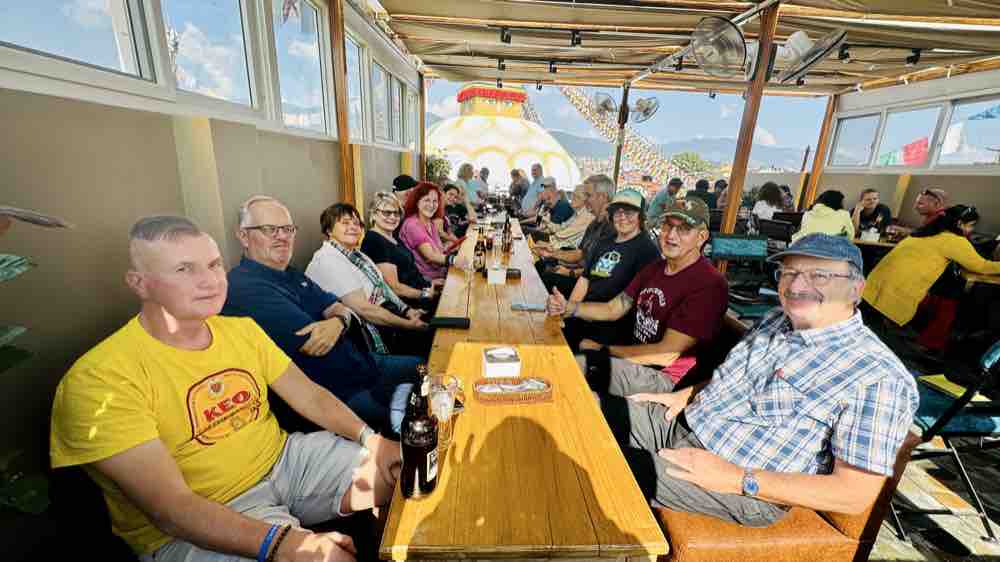
- Look for signs or ask before photographing inside a shrine.
- Ask before photographing people, especially worshippers and monks.
- Holy men (sadhus) at Pashupatinath often expect a small tip for a photo.
- Avoid flash during prayers and ceremonies.
- Never fly a drone near temples without permission.
A smile and a gesture towards your camera is the easiest way to ask. If someone shakes their head, simply say thank you and move on.
05Offerings, tika and donations
You will see locals offering flowers, rice, coloured powder and coins, and receiving a red tika on the forehead as a blessing. Visitors are welcome to take part respectfully. A priest may offer you a tika; it is a blessing, and a small donation is customary.
Donation boxes at temples and monasteries help with upkeep. A few hundred rupees is a generous gift. Do not touch offerings, statues or ritual objects unless invited to.
06Pashupatinath and the cremation ghats
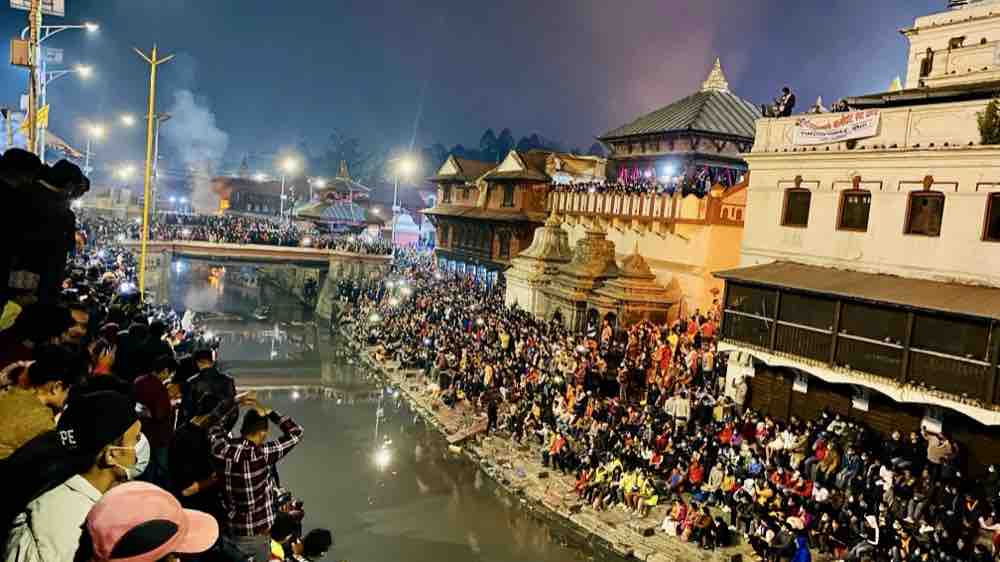
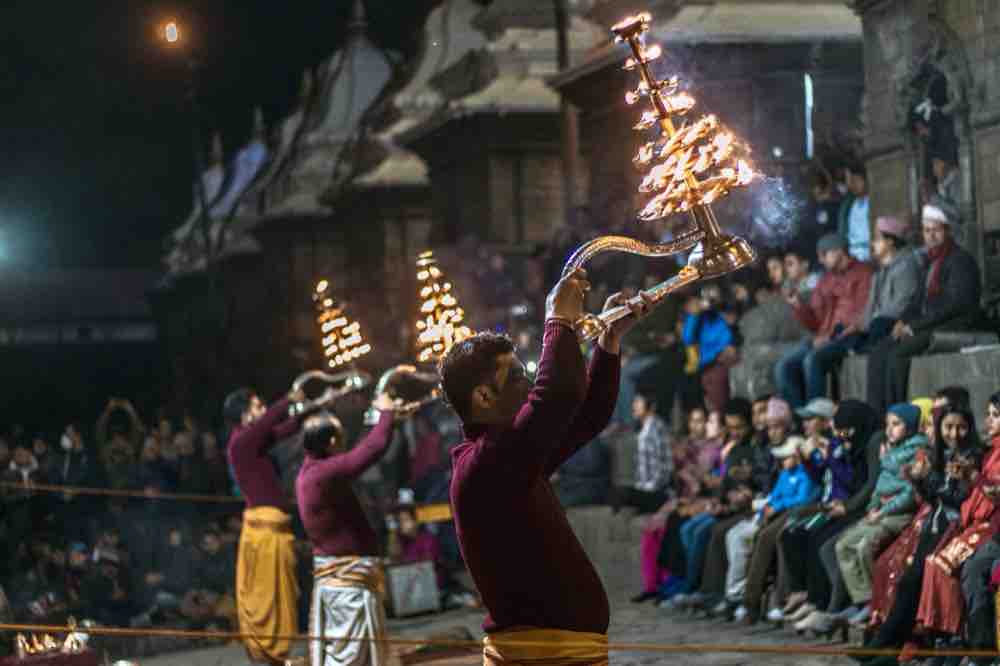
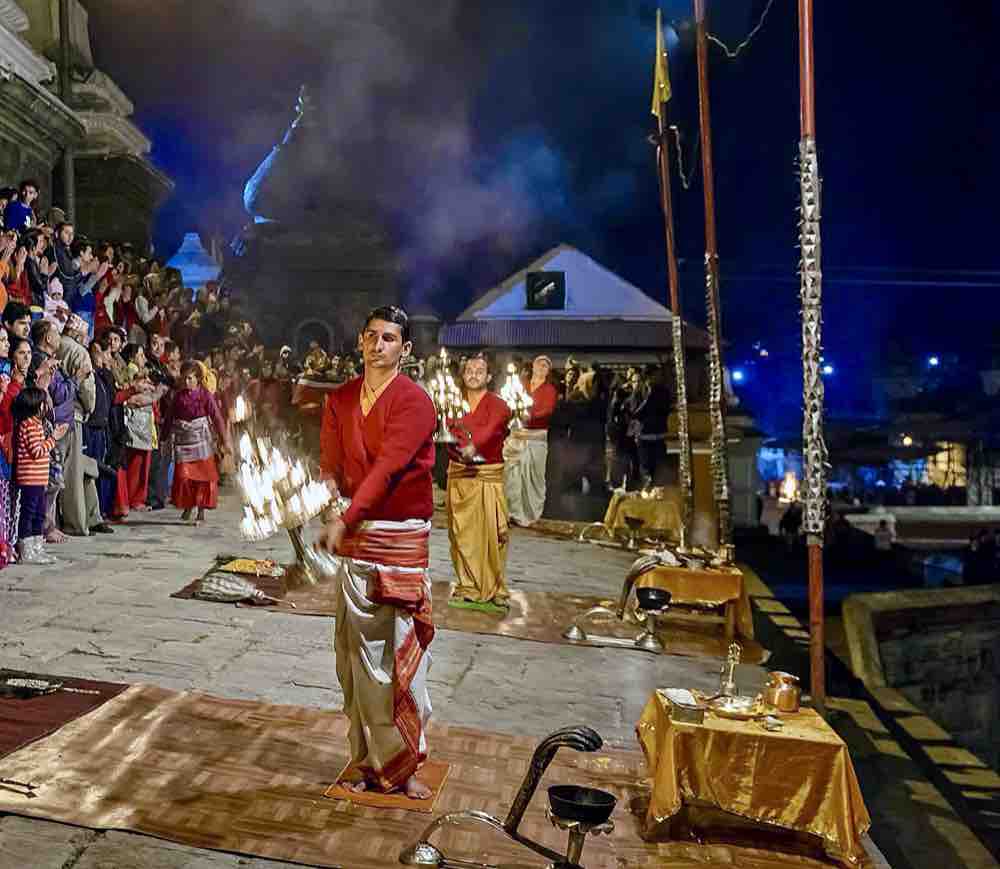
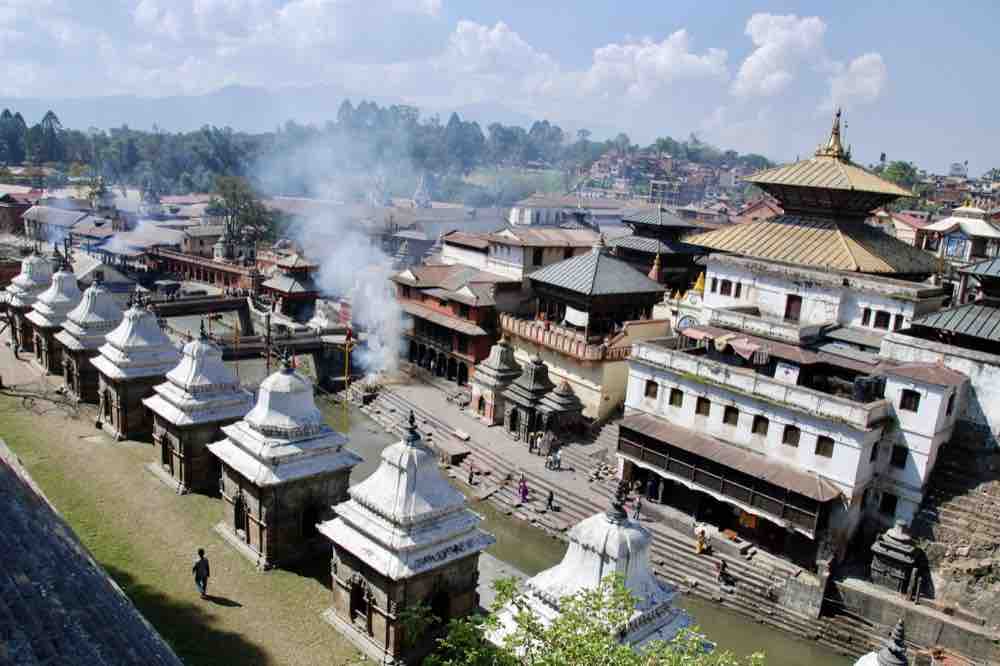
Pashupatinath is both Nepal's holiest Hindu temple and a place of mourning. Non-Hindus may not enter the main temple, but may watch from the east bank of the Bagmati River, explore the open areas and see the evening Aarati.
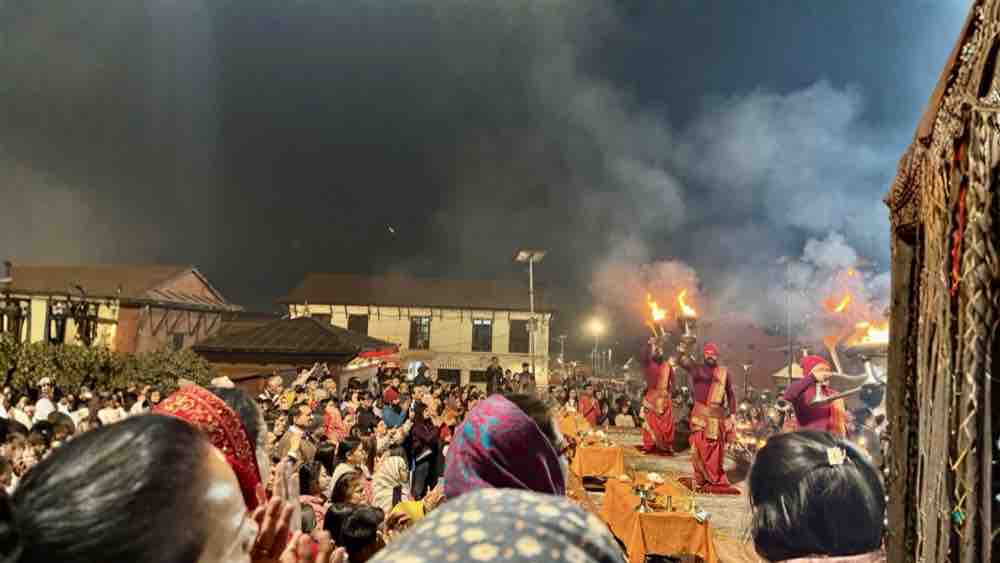
- Stay quiet and respectful near the cremation ghats.
- Never photograph cremations or grieving families up close.
- Do not step over offerings or ritual items on the ground.
- Follow your guide's lead, especially at busy times such as Mondays and festivals.
The Pashupatinath evening Aarati tour explains the rituals and beliefs with a local guide. Read more in our Aarati guide.
07Visiting Buddhist monasteries
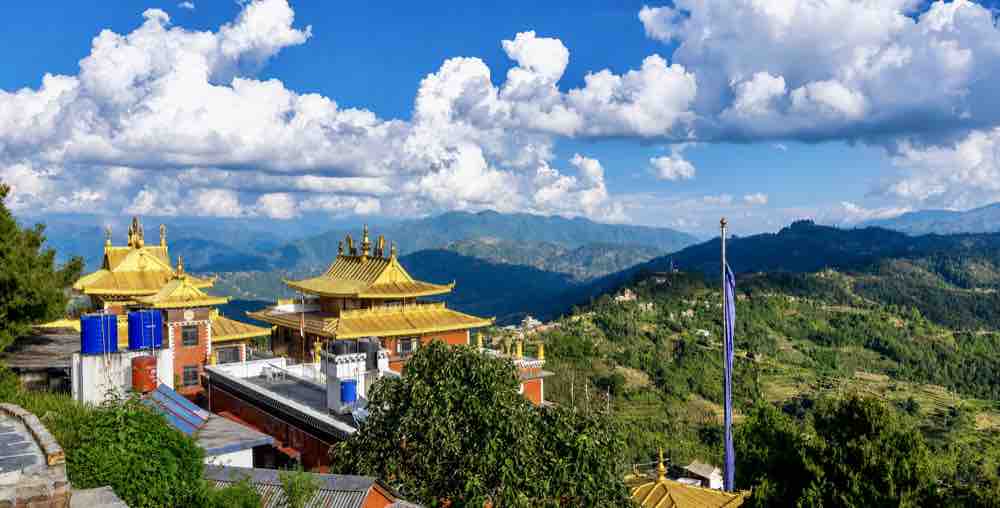
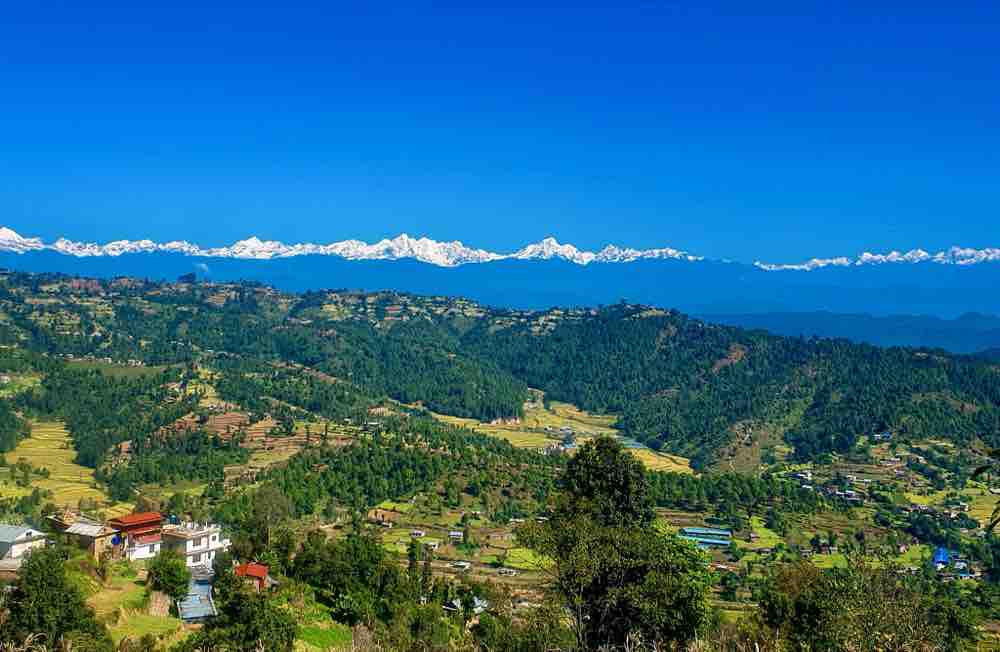
Visitors are welcome at most monasteries, such as those around Boudhanath and the golden monastery at Namobuddha.
- Remove shoes and hats before entering the prayer hall.
- Sit quietly at the side during prayers, with your feet tucked under you, never pointing at the altar.
- Do not touch the monks' books, instruments or the altar.
- Ask before taking photos, and never photograph the monks during prayers without permission.
Experience a working monastery on the Namobuddha and Dhulikhel tour.
08Everyday customs that also matter
- Use your right hand to give, receive and eat; the left is considered unclean.
- Do not point the soles of your feet at people, shrines or statues, and do not step over people.
- Avoid touching anyone's head, including children's.
- Public displays of affection are best kept small.
- Greet people with "Namaste": palms together, a slight nod.
- Food that has touched your lips is "jutho"; do not share it. Our food guide has more eating customs.
09Quick checklist and visiting with a guide
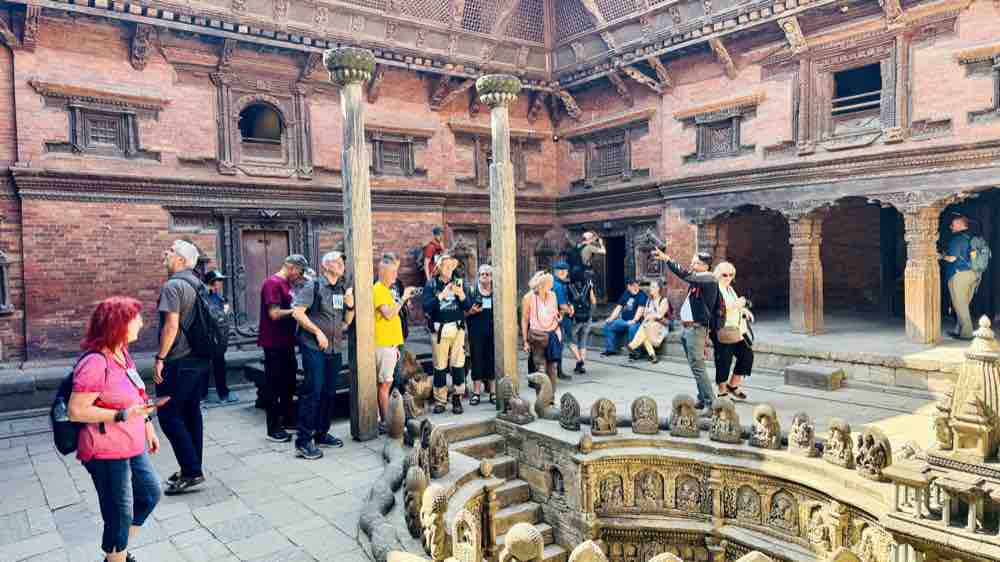
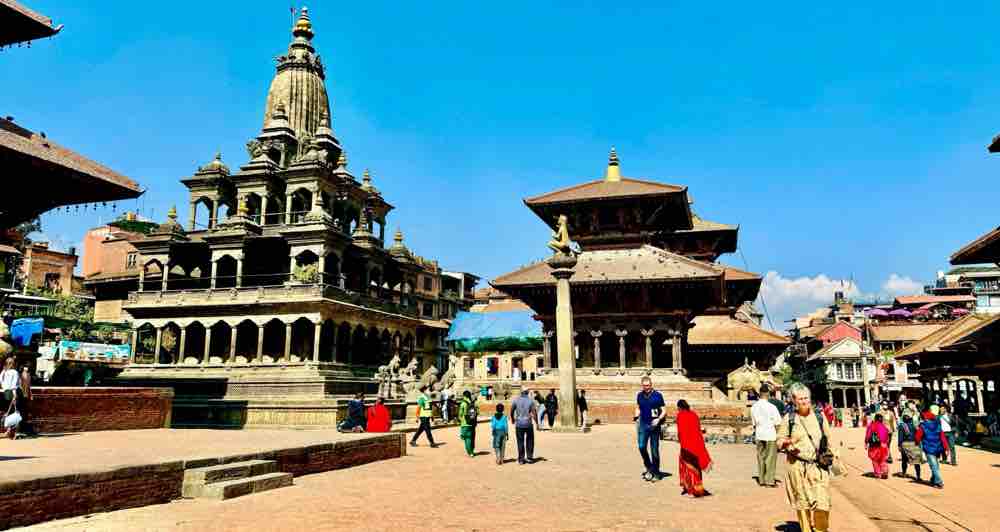
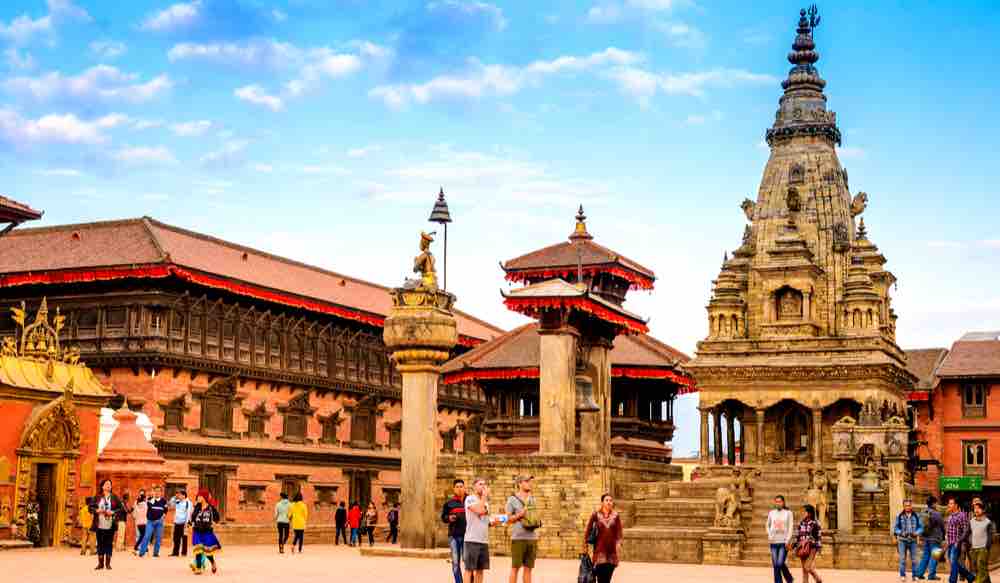
A good local guide makes every visit richer: they know which shrines you may enter, explain the gods and symbols, and help you join rituals respectfully. Explore the valley's temples on the 4 UNESCO sites tour or all seven monument zones on the 7 UNESCO sites tour.